By Gerri Miller
Elmore/Autauga News
Despite promising area residents, landowners and farmers that it would fully investigate and help develop a hybrid plan to replace a proposed 15-mil ad valorem tax, the Autauga County Commission moved forward on a resolution to bring an ad valorem tax increase one step closer.
It was standing room only just two weeks ago as Autauga County School Superintendent Timothy Tidmore presented a plan on the tax increase. The increase, part of a six-year, four-phase plan, would fund new schools, repair existing ones, increase STEM activities and much more.
After hearing concerns from dozens of landowners, farmers, business owners, homeowners and others at the November meeting, the Commission tabled the Board of Education’s request that it apply to the Legislature for permission to hold a local election on the tax increase.
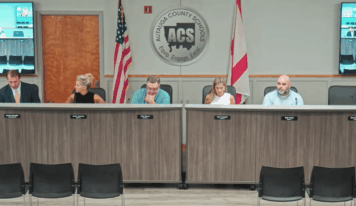
Two weeks later in a much smaller meeting attended by noticeably fewer residents, the ACC approved the move to let the request go the Legislature for a local vote on the issue. The ACC approved the BOE’s request to adopt the proposal to increase Amendment 382 and publicize the notice to apply for the passage of this local act.
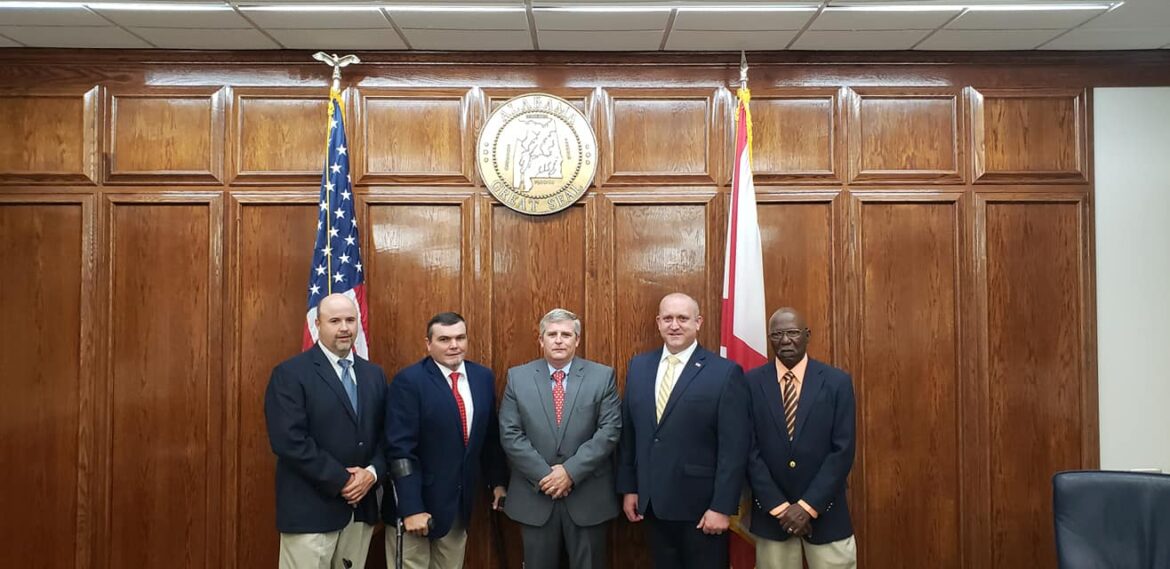
Commissioner Thrailkill said a committee set up to look at the tax proposal and suggest changes had been named and was actively meeting. It consisted of Thrailkill, Commissioner Rusty Jacksland, Debbie Price from the Town of Billingsley, Betty Ashley from the Town of Autaugaville, and Albert Striplin from the City of Prattville.
That group had a final meeting date set for 4:30 p.m. Tuesday night. “December 13 was to be our final meeting where we were going to address the Commission and the Board of Education,” he said.
No date was set for the vote at the November meeting and Commissioners said then they wanted time to fully investigate all of the options. Thrailkill was the one who brought up the idea of forming a committee to do just that.
Last night, Thrailkill was the only Commissioner to vote against the proposal. “We bypassed bringing this up in the December 13 meeting.”
Tidmore said the School Board will still utilize that committee in upcoming discussions on the plan. “I envision that group as being a strategic planning committee,” he said.
The proposed 15 mill property tax increase would require legislative approval and a public vote. Tidmore said the School Board will bring the plan to the Legislature in early January.
“Once they (Legislature) act on it, we will plan a special referendum for the people.”
“There will be lots of opportunities for community involvement in this process,” Tidmore said.
The increase as it stands now would raise the millage total for education funding in the county to 22 mills, adding $150 to $170 a year on property tax payments for a house valued at $100,000.
The current 10 mill levy is $100 per $100,000 of the assessed value of the property which generates $7.9 million in revenue for the schools. It includes 3 mills funded by the Legislature which will no longer be funded under the new plan. The proposed 22-mill levy would be $220 per $100,000 of assessed value, which would bring in $17 million in revenue each year for the schools.
Comments during the public hearing and commission meeting ranged from those individuals fully supporting the increase to farmers who said they can’t afford the hike. Some were worried about the impact the increase would have on working people and those on fixed incomes.
Many people said with price increases and the state of the economy, now is not the time to introduce a large tax increase.
“This is a nightmare tax increase,” said Carol Johns at the November meeting. “With inflation, heating costs scheduled to spike this winter and 17 percent of Autauga County residents living in poverty, it could be the difference between some of our children eating dinner or going hungry.”
Derek Chandler asked if all funding sources were looked at as ways of funding the plan. “People are tired of being taxed to death,” he said. “A lot of these people are farmers and they won’t be able to afford to make a living. This tax needs to be fair across the board.”
Autaugaville farmer Irene Langford said the tax would be huge for those who farm for a living.
“I’m all for supporting education, but you are hurting people who have land,” she said. “We don’t set the prices of our commodities. We don’t know if we will make enough this year to have a crop next year. A property tax is the worst thing to put on people. It needs to be spread out where it hits everybody the same.”