
FROM THE ELMORE COUNTY COMMISSION AND NATIONAL WEATHER SERVICE
For more information on different subjects, visit https://www.weather.gov/gld/LightningSafetyAwarenessWeek
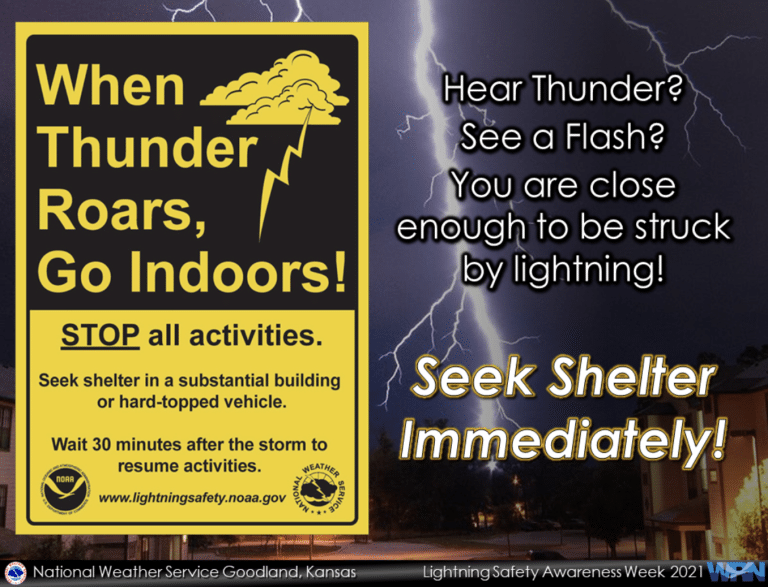
The National Weather Service wants to build a Weather-Ready Nation where all are prepared for a variety of weather-related hazards. All thunderstorms share a dangerous threat: lightning. Lightning is unpredictable, occurring at any time and striking up to 10-15 miles away from the storm. Are you weather-ready? Now is the time to make sure you know how to stay safe when severe weather threatens. Therefore, the week of June 20th to 26th has been designated National Lightning Safety Awareness Week.
The above link has been created to raise lightning awareness for the High Plains. Storms can pop up almost any day during the warm season, so stay aware and please prepare!
Anytime the threat for severe weather exists, stay updated on the latest weather information by going to the National Weather Service Website, https://www.weather.gov or mobile.weather.gov, by tuning in to NOAA Weather Radio, or your local television and radio stations.
Today, we will highlight some facts about lightning strike victims.
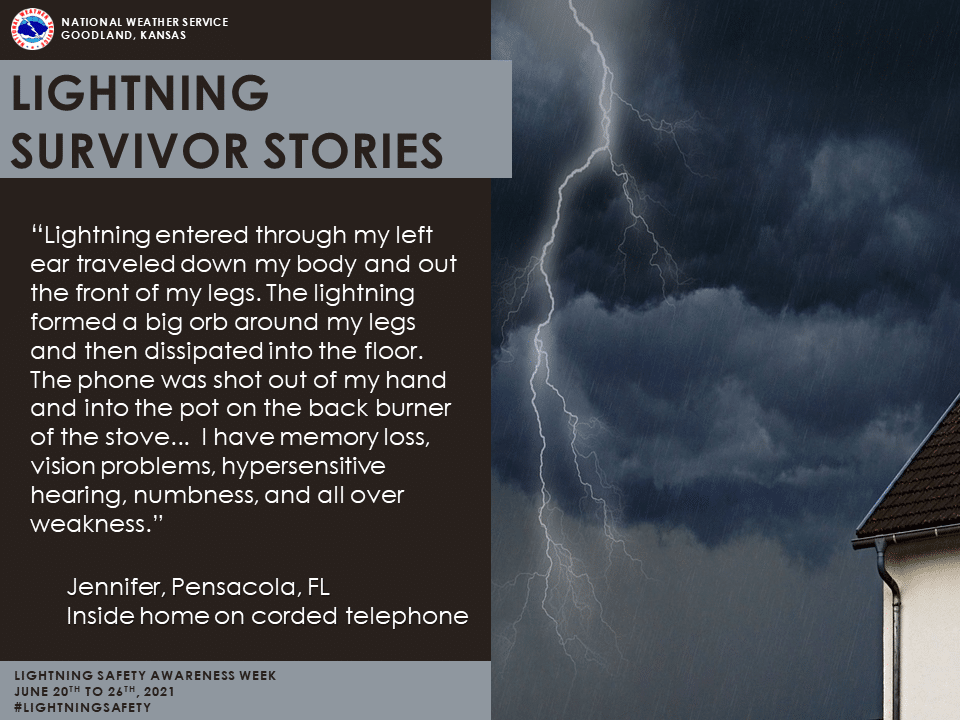
While any lightning fatality is tragic, injuries caused by lightning can be devastating to both the victim and the family. For those who have a family member or relative that suffers a significant disability from lightning, life changes forever. In addition to the physical pain and mental anguish suffered by the victim and their family, the incident may lead to a loss of income for all involved as medical expenses can drain the family’s financial resources.
If someone is struck by lightning, it is critically important that they receive the appropriate medical attention immediately. Some deaths can be prevented if the victims are attended to promptly. Lightning victims do not carry an electrical charge and are safe to handle. First, check to see that the victim is breathing and has a pulse, and start cardio-pulmonary resuscitation, if needed. Then have someone dial 911. If possible, move the victim to a safer place. Do not let the rescuers become lightning victims. Lightning can strike the same place twice.
Lightning strike victims may face many mental challenges that they will have to live with for the rest of their lives. When the brain is affected by a lightning strike, the person often has difficulty with many of the mental processes that most people take for granted. The person may suffer from short-term memory loss, and may have difficulty remembering new information and accessing old information. Victims may often find it very difficult to carry on more than one task at a time, and may be easily distracted. Their personality may change and they may become easily irritated.
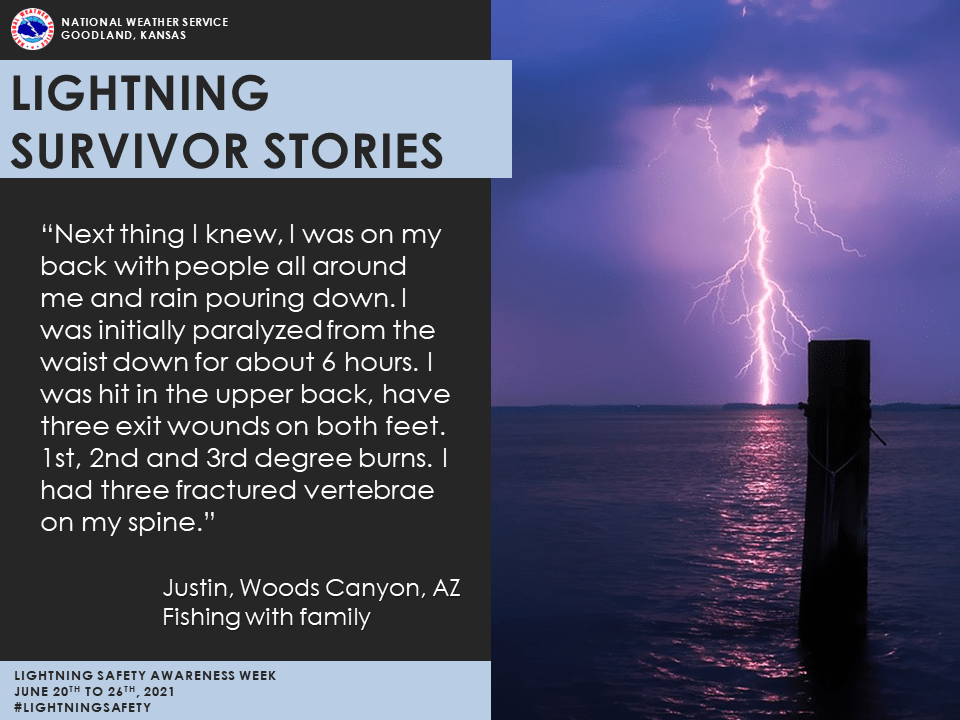
Lightning strike victims often become easily fatigued and may become exhausted after only a few hours of work. This may be because mental tasks that were once automatic may now require intense concentration to accomplish. Although some victims may sleep excessively at first, after a few weeks many find it difficult to sleep more than two or three hours at a time.
Another common long-term problem for survivors is pain.
Medically, pain is difficult to quantify. Lightning strike victims often suffer irreparable nerve damage that causes intense pain that affects the ability to function. Many survivors complain of chronic headaches, some of which are very intense and debilitating.
Lightning Strike and Electric Shock Survivors International is a support group for individuals and families that are struggling with life after a lightning injury. Helpful information is available at their web address: www.lightning-strike.org