A recent article by the Rural Water Association is giving high praise to the City of Millbrook.
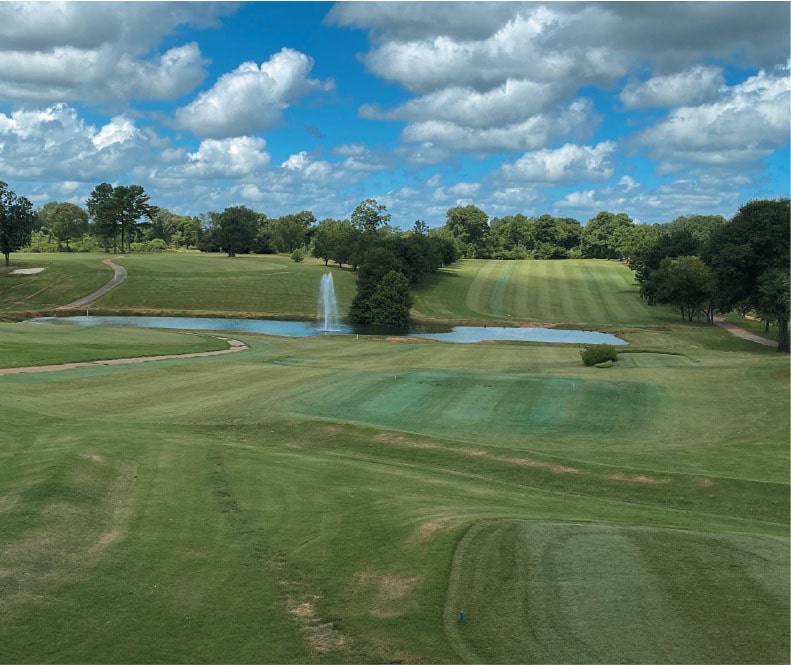
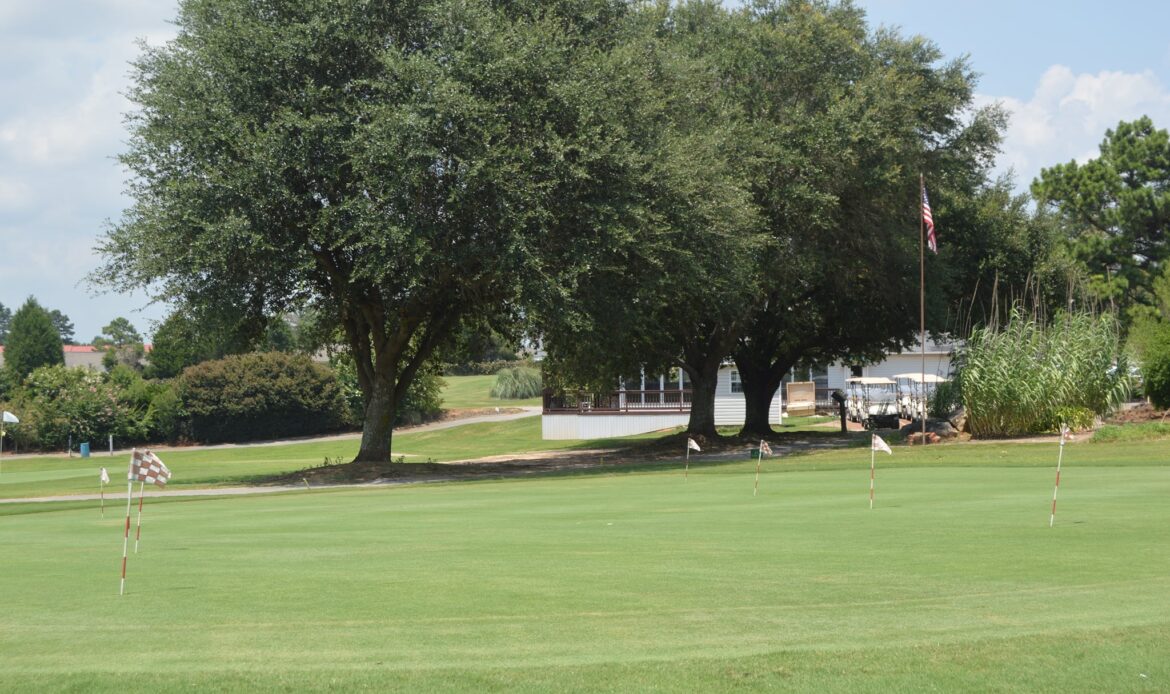
The City posted the article to their Facebook page, saying, “Kudos to Mayor Al Kelley, the Millbrook City Council, and Millbrook Utilities Department Head Michael Harris and staff for an innovative project that was featured in the National Rural Water Association magazine, Rural Water. City of Millbrook Utilities was recognized as the only system to date that has utilized reuse permitting in Alabama. The City is using the high quality effluent from the wastewater treatment plant to irrigate The Pines Golf Course, a municipal owned facility, saving the City about $30,000 per month!”
Check out the entire article below.
City of Millbrook Utilities Wastewater Reuse Success
BY MIKE BAUMGARTNER
WASTEWATER SPECIALIST, ALABAMA
RURAL WATER ASSOCIATION
Before we begin the story, we need to understand what reuse is and what role it plays in our industry. Reclaimed water is cleaned or treated wastewater. It is the final product of advanced treatment processes. AD EM has its definition: “the use of reclaimed water as a substitute for other water sources for the beneficial irrigation of areas that may be accessible to the public. This includes areas such as golf courses, residential and commercial landscaping, parks, athletic fields, roadway medians and landscape impoundments:” Landscape irrigation is the most common use. Consider that 30% of potable water used is for outdoor purposes. That accounts for nearly 9 billion gallons per day here in the U.S. Another benefit of reclaimed water is nutrient (nitrogen and phosphorus) levels that are ideal for irrigation. Much less granular fertilizer is needed.
I have personal experience with golf course reuse while working in Florida. The plant I managed sent 1.4 m.g.d. to three golf courses. Two were private, and the other was the county’s 36-hole course. The effluent was pumped and metered when entering the established course pond system. In the beginning, the private clubs were reluctant to accept the water, but as time passed, they were begging for it. The well water used for irrigation in Florida came with a cost. That cost them a ton of money, but ours was free. In hindsight, we probably should have charged a fee, but we wanted to avoid having to send our effluent to a receiving stream. Of course, the main benefit is to conserve potable drinking water sources.
So, let’s begin the story of the city of Millbrook Wastewater Treatment Plant. They are the only system that I am aware of that has utilized reuse permitting in Alabama. ADEM has two classes of reuse listed as “A” and “B”. Reuse used for crop and pasture is considered ‘’A”, while golf courses irrigation falls under the “B” category. Class “Pt” is a bit more stringent on regulations. You can find information on the web. The reuse program is located in 335- 6-20-.10 of the rules. The discharge limits for the treatment plant are reported as flow to a holding pond, golf course irrigation.
The discharge limits are specific to this permit. The limits are similar to other permits with a couple of exceptions. There is a nitrate nitrogen limit of 10.0 mg/I. The other nutrient with limits is ammonia, set at 3.75 mg/I for a weekly average and a monthly average of 2.5 mg/I. The other parameter that has an unusual limit is TSS, with a weekly average of 7.5 mg/I and a monthly average of 5.0 mg/I.
“THE TREATMENT PLANT EFFLUENT IS DRINKING WATER CLEAR AND CONSISTENTLY MEETS A 98 PERCENT REMOVAL RATE. NOW THAT THE PLANT WAS PRODUCING A HIGHQUALITY EFFLUENT, ANOTHER IDEA EMERGED. WHAT IF THE PLANT COULD SEND ITS EFFLUENT TO THE CITY GOLF COURSE?”
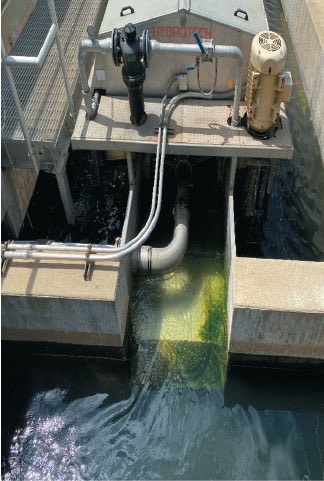
These limits have consistently been met because of the foresight of the city mayor and other city leaders. They understand that being proactive is the only way to remain in compliance and maintain sustainability. According to Chief Operator Gregg Guthrie, facility upgrades began in 2006.
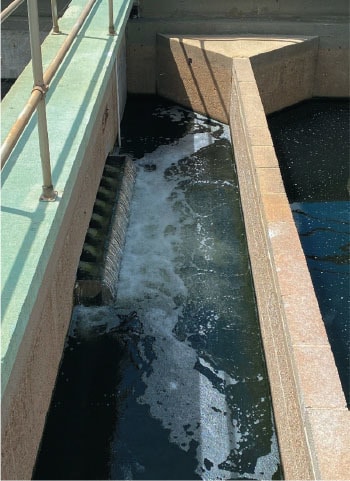
A belt press operation was built to process sludge, but the upgrade that excites Gregg the most was the effluent filter. According to Gregg, “That made all the difference in the world.” The treatment plant effluent is drinking water clear and consistently meets a 98 percent removal rate. Now that the plant was producing a high quality effluent, another idea emerged. What if the plant could send its effluent to the city golf course? That certainly would save the city money by not having to pump treated potable drinking water to the golf course for irrigation. The decision was made to do exactly that.
So, what did it take?
Rehabilitation took place at the golf course. Pond berms and damns were shored up, and the sprinkler system was upgraded, and of course, lines were laid to get the effluent to the course pond system. At the plant, the pumps are operated through a SCADA system, which means the operators can automatically set times of operation. The flow is metered and recorded as required by the permit. Presently, the pumps run from 6:00 a.m. to 9:00 p.m.
Once the ponds are at capacity, the flow is switched to its other permitted discharge to Cottonwood Creek. According to Gregg, they are pumping approximately 1.0 million gallons of reuse water per month to the city-owned golf course. The savings to the city is approximately $30,000 per month. They are not only saving the city money but are conserving valuable potable water. Congratulations!